Dossier · 5 plates
What a documented shipment looks like
Five annotated photographs of real Pepti shipments, taken at packing. They show where the identifying information sits on a box lid, how a carton holding one lot looks, how the courier label relates to the contents, and what the lid label does not carry. Compare these with your own parcel rather than with marketing images; the point is to know what to look for and what to ask for when it is missing.
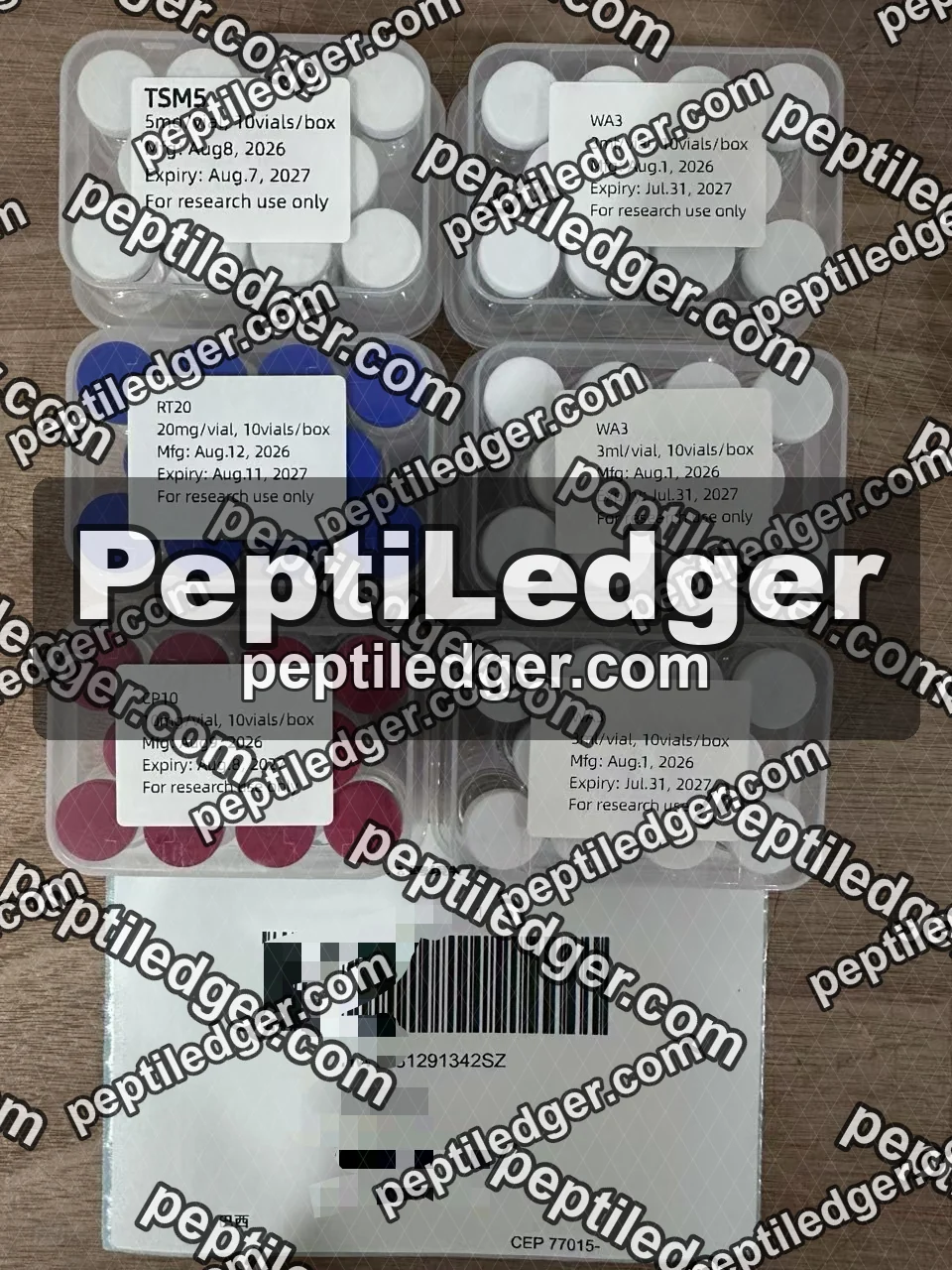
Lid labels and courier label
What a box lid tells you, and what it does not
Each lid label carries a short product code, the strength per vial and vial count, a manufacture date, an expiry date and the research-use statement. That is enough to match the box to an order line. It is not enough to match it to a certificate: the lot code is not printed on these lids. Ask for the lot code for each box and open the corresponding record before accepting the shipment as documented.
- 1Product code and strength per vial (here TSM5, 5 mg per vial, 10 vials per box). The code is the suffix that appears in the manufacturer’s lot numbering.
- 2Manufacture date and expiry date. The manufacture date should sit close to the date encoded in the lot code and before the test date on the certificate.
- 3Research-use statement, printed on every lid.
- 4Courier label with tracking barcode (personal details blurred). The tracking number ties the parcel to the invoice; it says nothing about the contents.
- 5What is not here: a lot code or a QR code. Those are on the certificate and the public record; ask for the lot code per box.
Shown Six 10-vial boxes, four product codes, one courier label
Compare with Order confirmation (codes, strengths, counts); lot codes supplied separately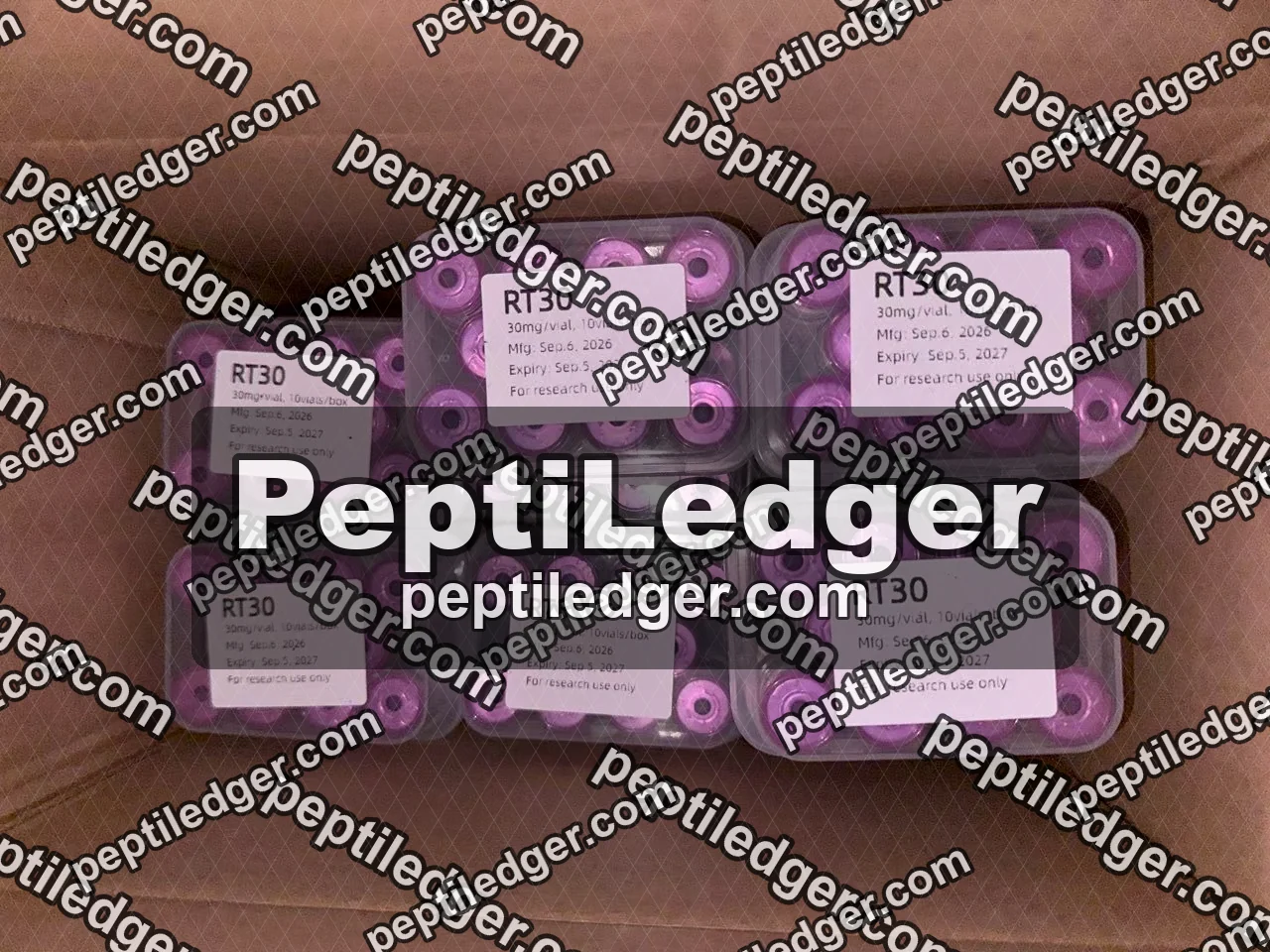
One lot per carton
Six boxes, one product code, one manufacture date
A carton holding a single product code with the same manufacture date on every lid is what a one-lot shipment looks like. Read every lid, not just the top one: a carton that mixes dates is a carton that mixes lots, and each lot needs its own certificate. Here all six lids read the same code and the same dates.
- 1Product code RT30 and strength (30 mg per vial, 10 vials per box).
- 2Same manufacture date and expiry on the far box; check each lid, not only the nearest.
- 3Plain carton with no product marking on the outside; identification is on the lids inside.
Shown Six boxes of one product code in one carton
Compare with The lot record for this code and manufacture date; one certificate should cover all six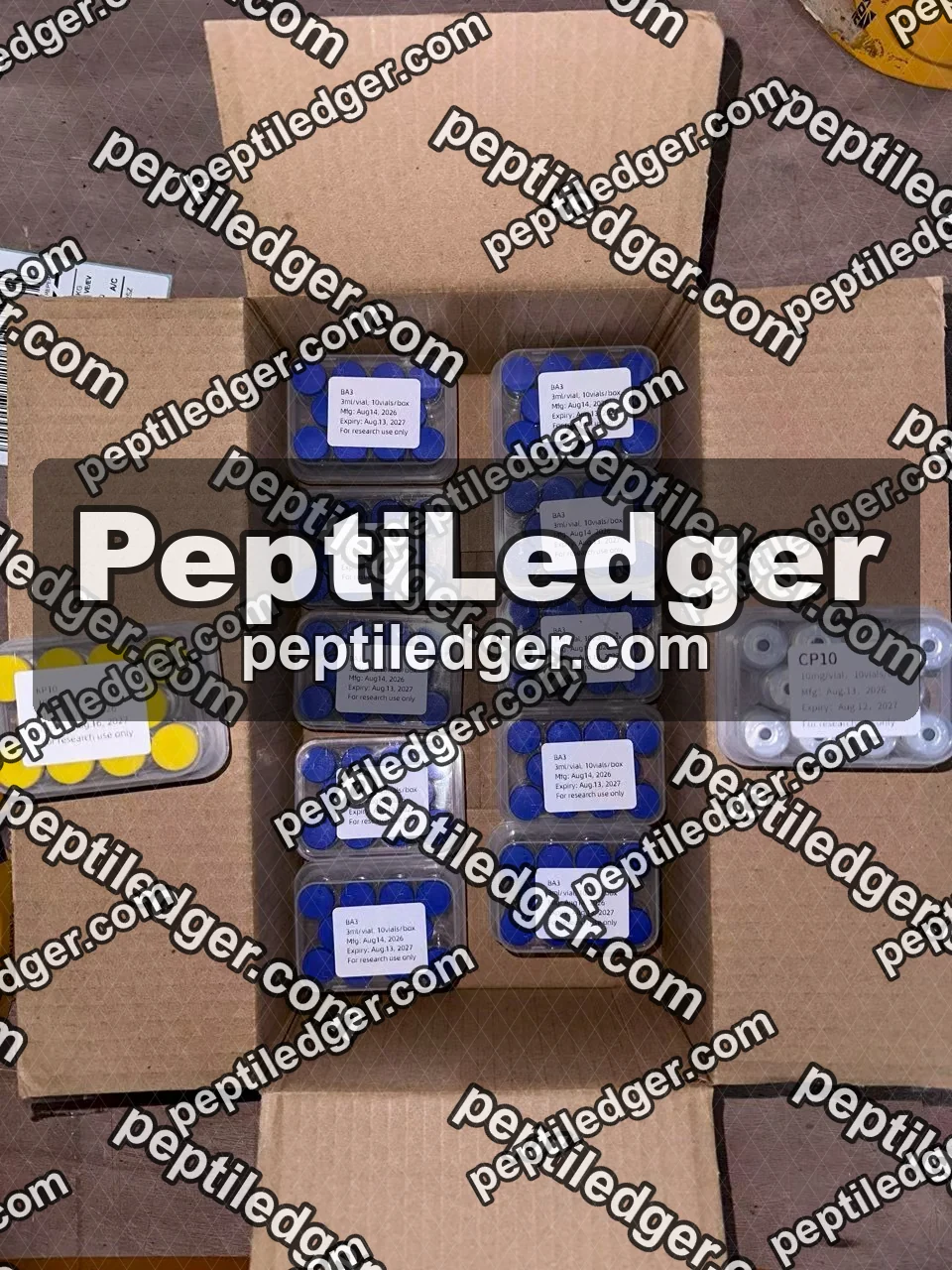
Packing
How boxes are packed, and what to count
Boxes stand in rows with lid labels facing up so that every label can be read without unpacking. Count the boxes against the packing list and read each lid; boxes of other codes packed in the same carton are normal in a mixed order and each carries its own label. Photograph the open carton before removing anything, so that a discrepancy can be shown rather than described.
- 1Lid label readable without unpacking: code, strength, dates, research-use line.
- 2A box of a different code (CP10) in the same order; its own label, its own lot.
- 3A third code, also labeled on the lid.
- 4Count against the packing list before anything is removed.
Shown Ten boxes of one code in the carton, two boxes of other codes alongside
Compare with Packing list and order lines; one lot code per product code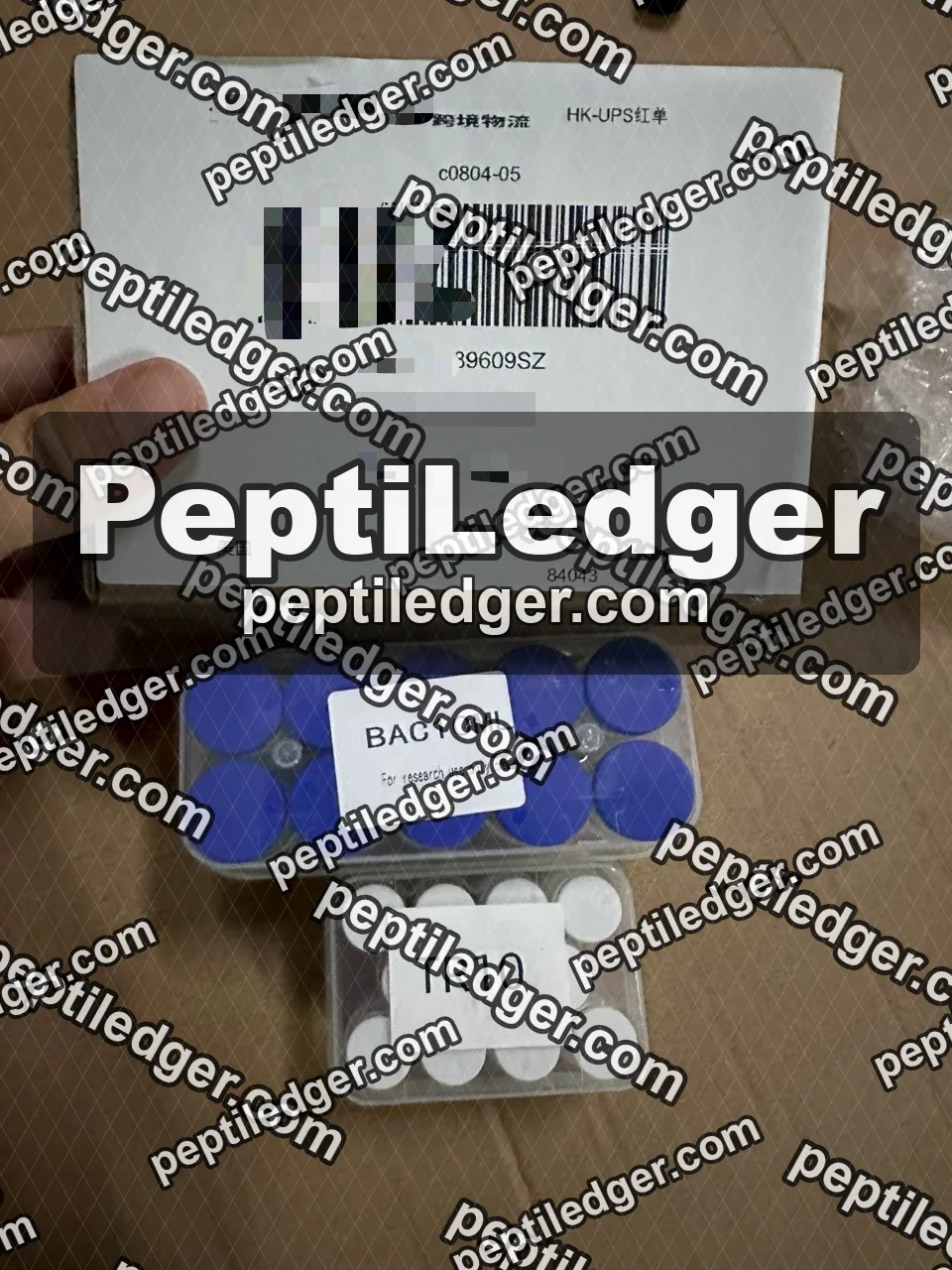
Courier label and contents
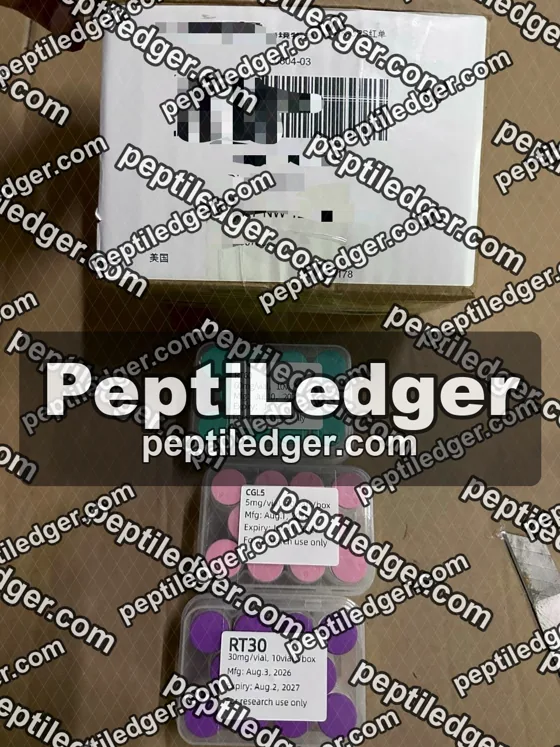
The courier label identifies the parcel, not the material
Three identifiers travel with a shipment and none substitutes for another. The courier label and its tracking number tie the parcel to the invoice and the delivery record. The lid labels tie each box to a product code and manufacture date. The lot code, obtained from the supplier, ties the box to a certificate and a public record. A receiving check records all three.
- 1Tracking barcode and number (other details blurred). Keep it with the invoice.
- 2Lid label of the first box: product code and research-use line.
- 3Lid label of the second box; a separate product, a separate lot.
Shown Courier label held over two boxes at packing
Compare with Invoice and tracking record; lid labels against order lines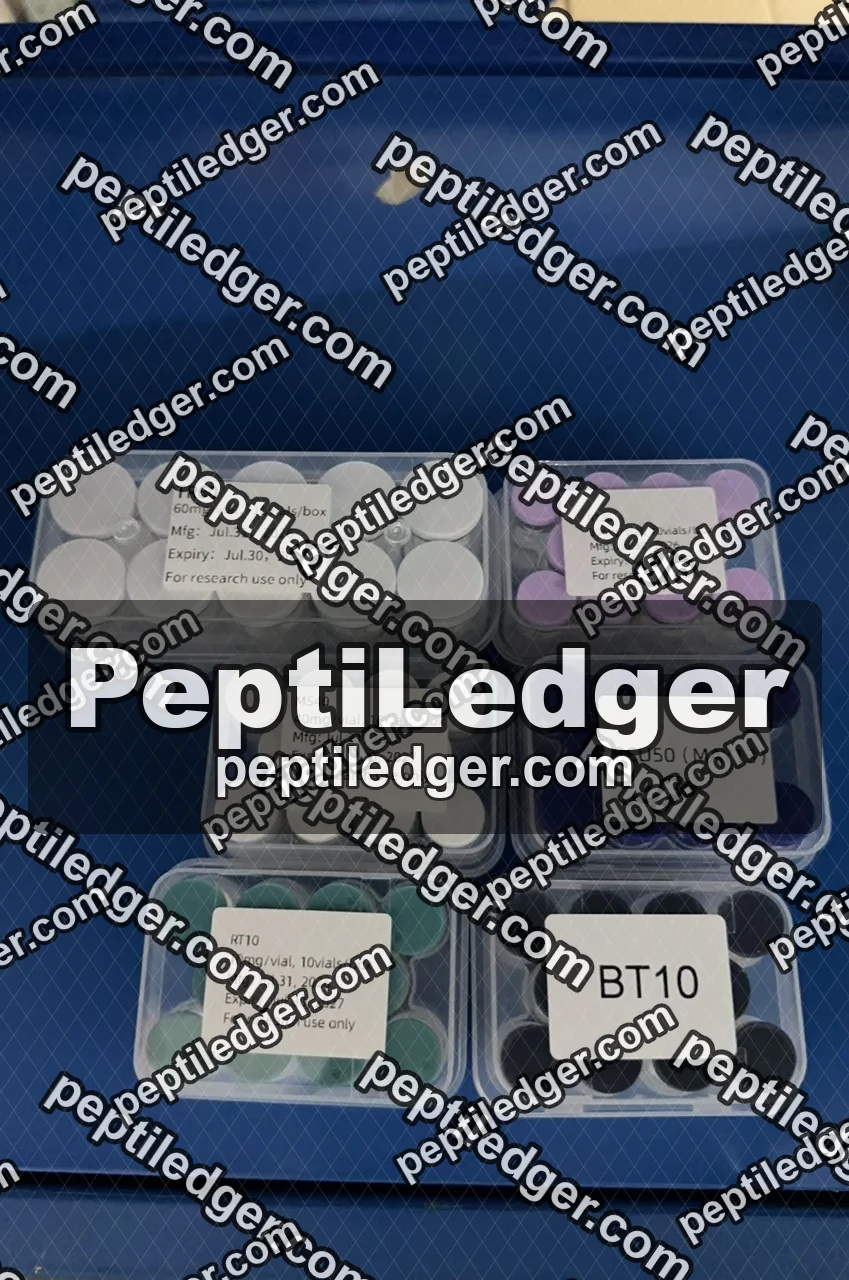
Two label styles
Full-field lid labels and code-only lid labels in one shipment
Two label styles can appear in one shipment: a full-field label with code, strength, dates and the research-use line, and a code-only label with nothing else. A code-only lid is not wrong, but it means the strength, dates and lot must come from the vial label or the certificate. Note which boxes carry which style and ask for the missing fields before the boxes are separated from their paperwork.
- 1Full-field lid label: strength per vial, manufacture and expiry dates, research-use line.
- 2Code-only lid label (BT10): the remaining fields must come from the vial label or the certificate.
- 3Courier bag; the outer label with tracking is on the reverse.
Shown Six boxes in a courier bag, two lid-label styles
Compare with Vial labels and certificates for the code-only boxes
Appendix: further plates, unannotated
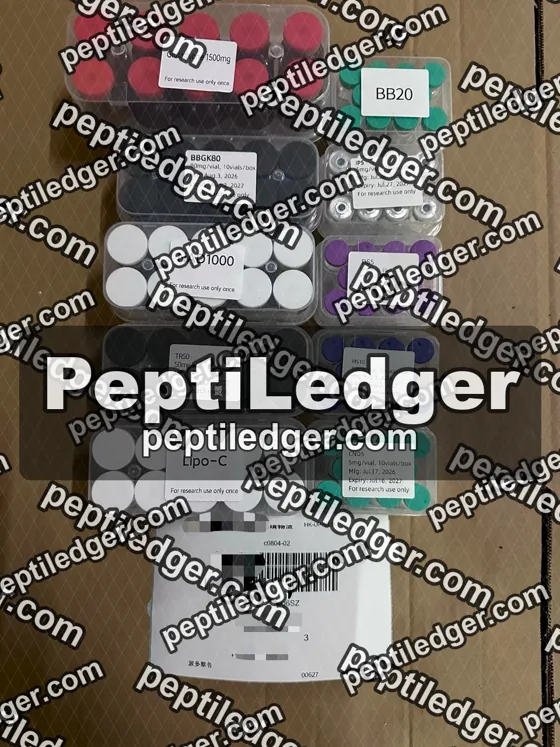
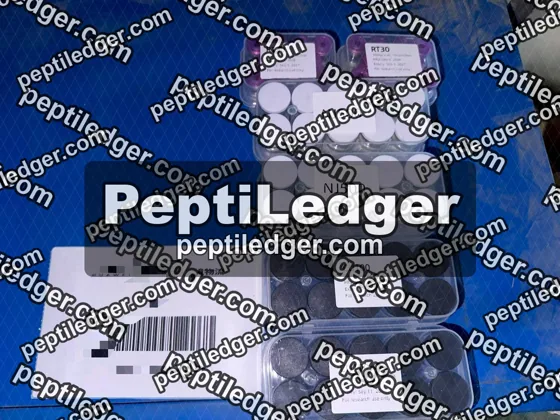
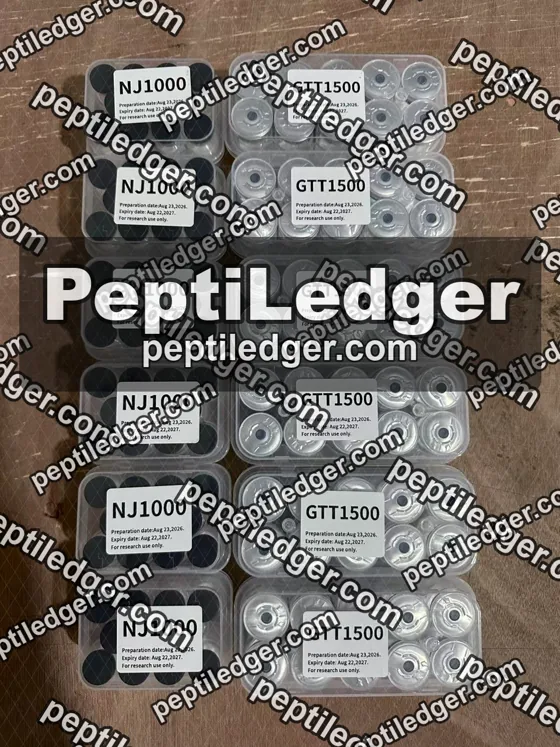
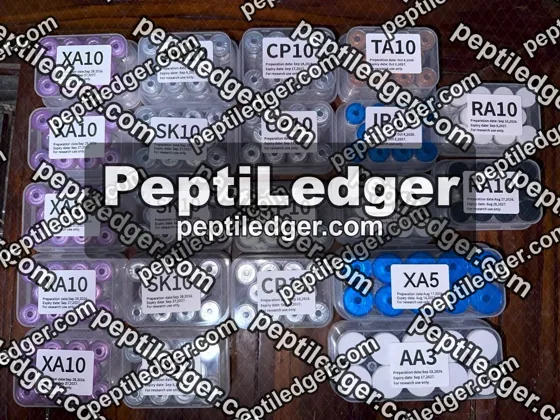
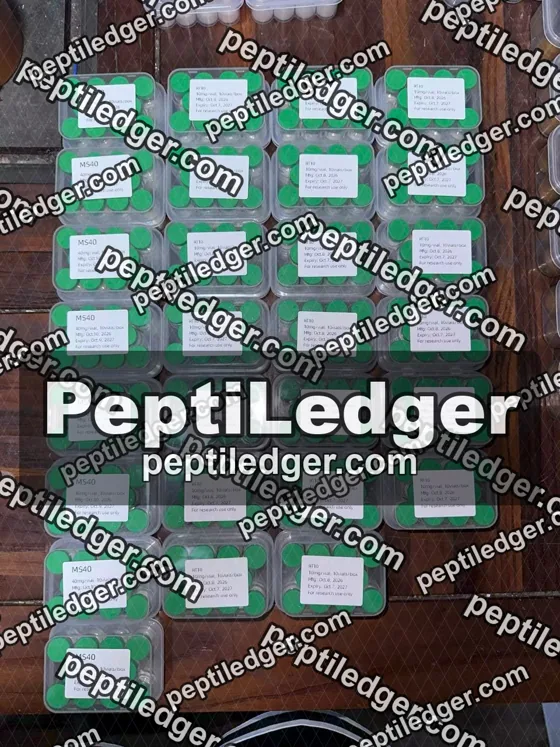
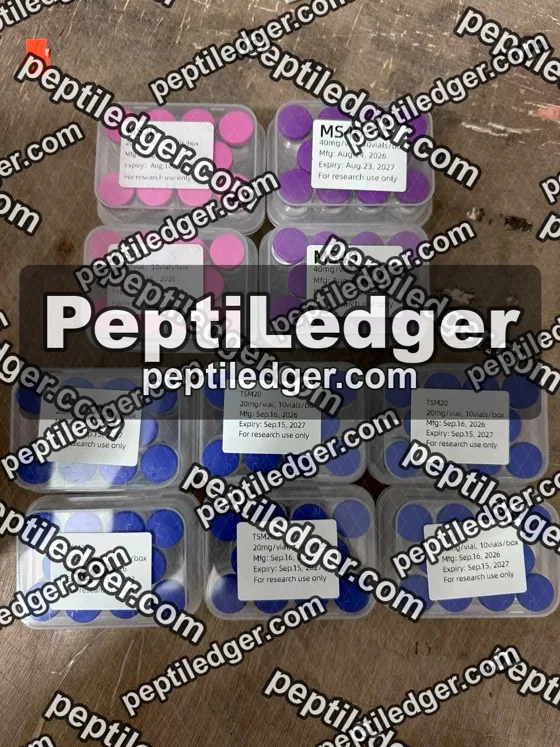
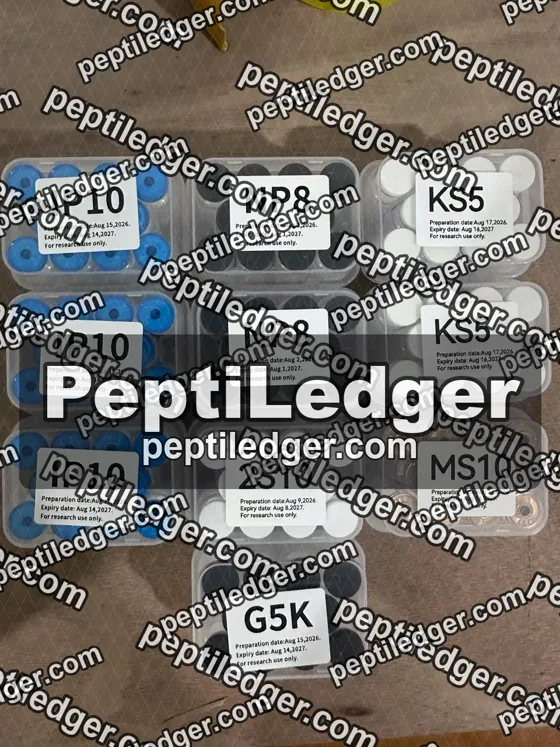
Twelve more photographs from the same packing sessions, shown small and without markers. They are here so that the five annotated plates above can be seen as typical rather than selected: the same lid-label styles, the same cartons and courier bags, different product codes. Nothing in them should be read as a lot-to-certificate match; that match is made with the lot code, not with a photograph.
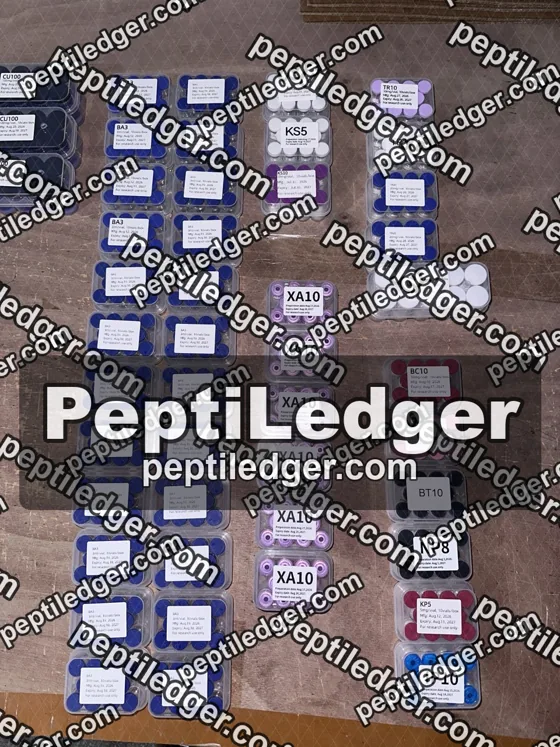
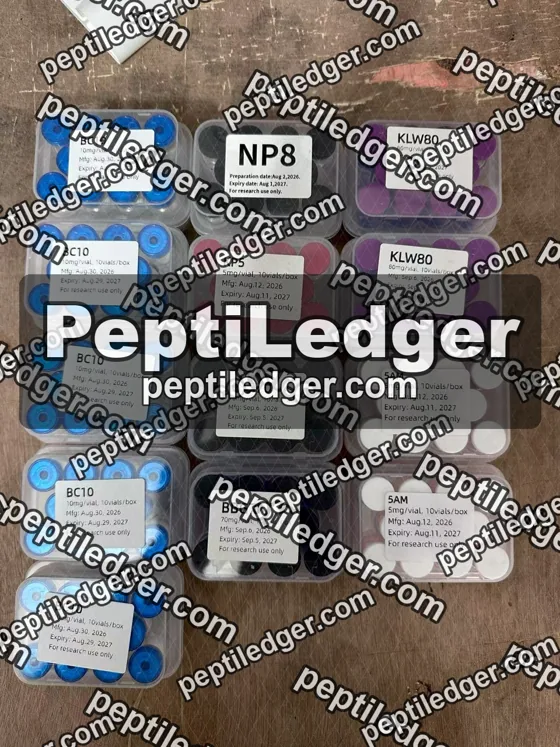
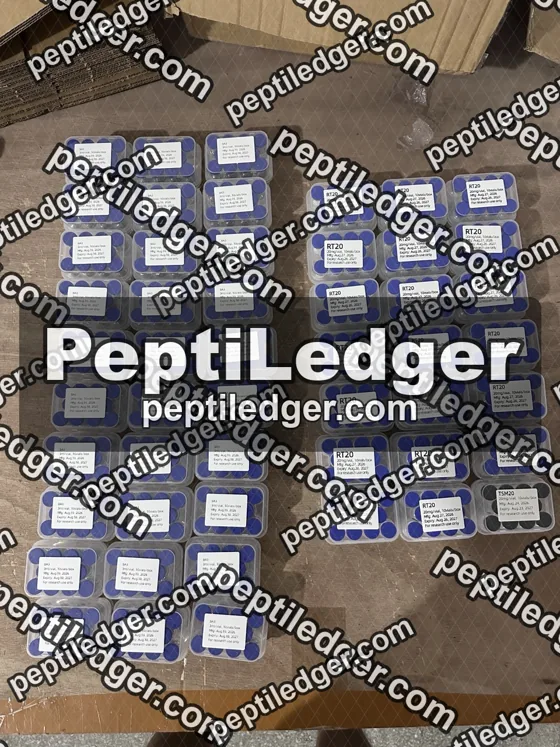
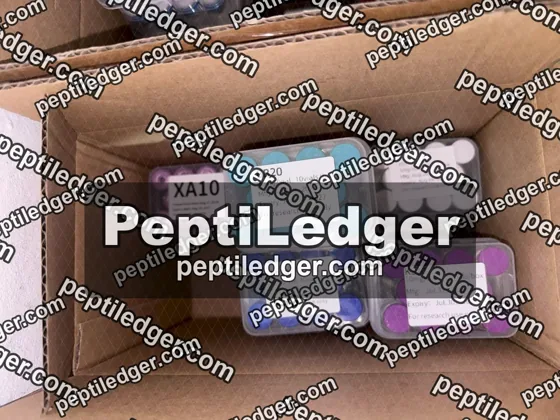
How to use these plates
Each plate is a photograph of an actual shipment with numbered markers. The markers point at the things a receiving check should compare: the product code and strength on the lid, the manufacture and expiry dates, the research-use statement, the courier tracking label, and the count of boxes against the packing list. They also point at what is absent. The lid labels in these shipments do not carry the full lot code or a QR code; those live on the certificate and the public lot record, and on the vial label where the manufacturer prints them. When you receive a parcel, the first question is therefore: which lot code does this box correspond to, and can I open that record? The COA guide explains what to do once you have it.
Personal details on courier labels have been blurred. Photographs are watermarked because unmarked copies of a manufacturer’s shipment photographs have been reused on other websites; see the legitimacy guide.
Maintained by Pepti, a Guangzhou peptide manufacturer; lot records referenced here are published at peptioem.com/coa. Photographs are of a Pepti shipment and are shown for comparison only; no vendor is compared or recommended.