Buyers frame this as a choice between countries. It is more useful to frame it as a difference in what can be verified, and where. A supplier in the United States and a supplier in China each leave a trail in public records, regulatory databases, laboratory directories and document conventions; the trails are different, not longer or shorter, and most of the practical difficulty in cross-border buying comes from not knowing where the other country's trail is. This guide maps both.
It says nothing about which country produces better peptides, because the question is malformed: the same molecule can be well or badly made anywhere, and the research-peptide supply chain is more intertwined than the branding suggests. It also says nothing about shipping, import or logistics, which are outside this site's scope. It is about verification.
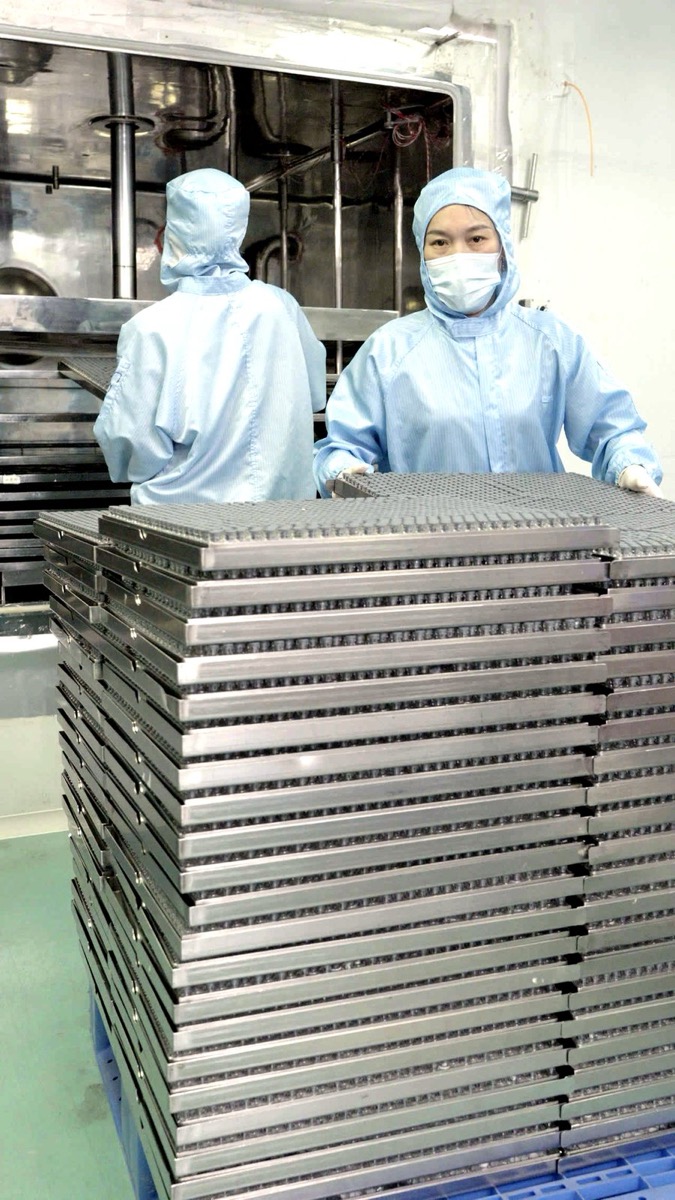
Where the supply actually comes from
The first thing to understand is structural. A large share of the synthetic peptides sold for research use worldwide is synthesized in China, by manufacturers ranging from large contract synthesizers to small specialist firms. A large share of the vendors selling to end buyers in the United States and Europe are not manufacturers: they are importers, relabelers and resellers who buy lyophilized material in bulk or in finished vials and sell it under their own brand, often with their own labels and sometimes with their own certificates derived from the manufacturer's.
The consequence for verification is that "US supplier versus China supplier" is frequently "reseller versus manufacturer" in disguise. The guide on manufacturers, stockists and resellers covers what that distinction changes; the point here is that the first question to put to any supplier, in either country, is who made this lot? A US vendor that answers with the name of a Chinese manufacturer and a lot code that resolves on that manufacturer's site has told you something verifiable. A US vendor that answers "we do" and cannot show a laboratory, a synthesis facility or lot-level records has told you something else. A Chinese supplier that is actually a trading company faces the same question in reverse.
Once you know who made the lot, the country-specific trails below apply to the manufacturer, and a separate, shorter set applies to any intermediary.
Verifying the legal entity
United States. Companies are registered at state level. Each state's Secretary of State (or equivalent) maintains a searchable register; Delaware's Division of Corporations and California's bizfile are the two most frequently relevant, and OpenCorporates aggregates most states. Search the exact legal name from the supplier's terms page or invoice. The register shows status, formation date, registered agent and, in some states, officers. A supplier that gives only a brand name and a PO box has not identified itself. Federal tax identifiers are not public and cannot be used for verification.
China. Companies are registered with the State Administration for Market Regulation and its local bureaus, and the records are public through the National Enterprise Credit Information Publicity System. The search works on the Chinese legal name or the 18-character unified social credit code; English brand names usually return nothing. Ask the supplier for its business license, which carries both, and search. The record shows legal representative, registered address, registered capital, establishment date and business scope. Read the scope: a company whose scope is "trade in chemical products" is a trading company; one whose scope includes manufacture of chemical or biochemical products may be a manufacturer. Registered capital is a formality and not a quality signal.
In both countries, the test is the same: the entity exists, is active, has an address consistent with the supplier's claims, and matches the name on the invoice. The legitimacy guide adds the domain and document checks that go with it.
The regulatory footprint
United States. FDA regulates drugs and the establishments that make them. Manufacturers of drugs for the US market register under 21 CFR Part 207 and appear in the Drug Establishments Current Registration Site; FDA inspects registered establishments and publishes outcomes in its Inspection Classification Database. A research-use peptide supplier is, in most cases, not a drug manufacturer in this sense and will not appear in either database, and that absence is not a mark against it. What is a mark against a supplier is claiming a registration or inspection that the databases do not show, or presenting registration as approval. FDA's own position, repeated on its pages, is that registration is not approval or endorsement.
China. The National Medical Products Administration regulates drugs; research-use chemical producers generally fall outside its licensing. NMPA assesses GMP compliance by inspection rather than by issuing certificates since the 2019 revision of the Drug Administration Law, so a Chinese "GMP certificate" needs the reading set out in the GMP claims guide. Separately, Chinese manufacturers that supply active substances to the European market are inspected by European authorities and, if compliant, receive certificates recorded in EudraGMDP. That database is the single most useful public check on a Chinese manufacturer's regulated-market standing: searchable by name, specific to a site and a scope, and maintained by the regulator rather than the company. As always, the scope must include your product for it to matter.
What the footprint tells you, in either country. A manufacturer that appears in a regulator's database for some products has been inspected to a known standard for those products. It has not necessarily made your research-use lot under that standard, and usually has not. The regulatory footprint is evidence about the company's general competence and identity; the lot-level evidence is still what describes your vial.
Document conventions
Language and identifiers. Chinese manufacturers' certificates are often bilingual or English-only with a Chinese original behind them. Where both exist, compare the identifiers (product, CAS number, lot code, dates) between versions; translation errors in numbers are rare but template errors are not. US vendors' certificates are English-only, and the question is whether they are the manufacturer's certificate, a re-typed version of it, or a document the vendor generated from its own testing.
Lot codes. A manufacturer assigns lot codes; a reseller may keep them, replace them with its own, or omit them. A certificate from a US vendor whose lot code format matches no public record anywhere is a certificate you cannot resolve at its origin. Ask which manufacturer's lot it corresponds to. Chinese manufacturers vary enormously here: some publish lot records with stable code formats (Pepti's PEP codes, used as the worked example throughout this site, are one instance); many issue certificates with no public counterpart.
Public libraries. Where a manufacturer, in either country, publishes lot records on its own domain with a QR code on the label pointing to the record, verification is a matter of minutes. Where it does not, verification depends on emailed PDFs and the manufacturer's willingness to answer questions. The presence or absence of a public library is a better predictor of how verifiable a supplier is than its country.
Independent reports. US vendors frequently display third-party laboratory reports on their product pages; Chinese manufacturers increasingly do so too. In both cases, read the client and manufacturer fields and retrieve the report from the laboratory's own site, as described in the third-party testing guide. A report displayed by a US vendor whose client field names a different company is the manufacturer's report, or someone else's, and should be read as such.
The laboratory ecosystem
Both countries have deep networks of analytical laboratories, and either can test a peptide sample to a high standard. The differences that matter are in how you confirm a laboratory's competence and where the sample is tested.
Accreditation directories. In the United States, A2LA and other ILAC-signatory bodies accredit laboratories to ISO/IEC 17025 and publish searchable directories with scopes. In China, CNAS does the same. In both cases the directory, not the laboratory's certificate image, is the source of truth, and the scope must include the relevant tests (HPLC, LC-MS) for the accreditation to be relevant. Many laboratories serving the research-peptide market in both countries are unaccredited; that is a fact to record, not necessarily a disqualification, provided their methods are stated and their reports verifiable.
Where to test. For a cross-border purchase, the strongest evidence comes from testing a sample you selected from the parcel you received, at a laboratory in your own country or any country you choose, with the chain of custody documented. A test arranged by the supplier at a laboratory near the supplier, on a sample the supplier chose, is evidence about the supplier's best sample. Both have uses; they are not interchangeable, and the registry on this site records who submitted each sample for that reason.
Reference materials. Pharmacopoeial reference standards, where they exist for a peptide, are available internationally; a laboratory in either country can calibrate content against them. Ask the laboratory what standard it used for content; "in-house standard" is common and should be stated.
Communication, conduct and remedies
Written confirmations. Time zones and messaging apps make cross-border communication fast and informal. Insist on written confirmation of the things that matter: the manufacturer's identity, the lot code to be shipped, the documents that will accompany it, and what the supplier will do if an independent test disagrees with the certificate. A supplier in either country that will not put those in writing has told you how a dispute would go.
Sample quantities. A supplier willing to sell a small first quantity with full lot documentation is making verification affordable. This is independent of country; manufacturers in China with published lot records frequently offer it, and some US resellers do not.
Remedies. Enforcing a contract across borders is slow and expensive in both directions, and this is not legal advice. The practical response is to structure purchases so that enforcement is rarely needed: small first orders, documents before payment, independent testing before scaling, and a supplier whose written policy on confirmed quality issues you have read. A domestic supplier offers easier recourse in principle; whether that is worth more than a foreign manufacturer's public lot records depends on how often you expect to need recourse and how much verification you did beforehand.
Price. A manufacturer's price is lower than a reseller's because a margin is missing, not because quality is. A price far below every comparable supplier, from a vendor with no verifiable records, is a different signal. The two published studies in the references bought products from online sellers chosen partly for low price and found material that bore little relation to its labels; the location of the sellers varied, and the common factor was the channel, not the country.
A verification matrix
The table below lists where each kind of check is done for a supplier in each country. "Same" means the method does not differ.
| What you are verifying | US-based supplier | China-based supplier |
|---|---|---|
| Legal entity exists and is active | State Secretary of State register; OpenCorporates | SAMR National Enterprise Credit Information Publicity System, by Chinese legal name or unified social credit code |
| Entity matches invoice and website | Same: compare names and addresses | Same, plus compare Chinese legal name on business license |
| Domain age and history | Same: RDAP creation date; Wayback Machine first capture | Same |
| Manufacturer or intermediary | Ask who made the lot; look for a laboratory and synthesis capability | Read business scope in the register; ask for site address and lot records |
| Regulated-market footprint | FDA establishment registration (Part 207); FDA Inspection Classification Database | EudraGMDP for European inspections; NMPA for domestic drug licensing |
| GMP claim | Verify in issuer's database; FDA issues none | Verify in issuer's database; NMPA inspects rather than certifies |
| Lot certificate | Resolve at the manufacturer's origin; if vendor-generated, ask for methods | Resolve on the manufacturer's own domain; compare bilingual identifiers |
| Independent report shown | Retrieve at laboratory; read client field | Same |
| Laboratory accreditation claimed | A2LA or other ILAC-signatory directory, with scope | CNAS directory, with scope |
| Where to test your sample | Any laboratory you choose; test the received parcel | Same |
| Written policy on confirmed issues | Ask for it in writing | Same |
Read down the columns and the asymmetry is small. The checks are the same in kind; the databases differ. A buyer who knows the right-hand column is no more exposed buying from a Chinese manufacturer than from a US reseller, and may be less, if the manufacturer publishes what the reseller cannot.
What this means for the choice
If the question is "where should I buy?", the honest answer from a verification standpoint is: from whoever gives you the most to check and checks out. In practice that often means a manufacturer, in whichever country, that publishes lot records, states its legal identity, welcomes independent testing and has a written policy, over an intermediary, in whichever country, that does not. Country-level generalizations run in both directions and are weaker than lot-level evidence in either.
The useful framing for an organization setting a sourcing policy is therefore not a country rule but a documentation rule: we buy from suppliers whose lots can be resolved at the manufacturer's origin, whose entity we have confirmed in the relevant register, and whose material we have tested at least once from a received parcel. That rule is country-neutral and excludes most of what goes wrong.
Checklist: cross-border verification
- You know which company manufactured the lot, as distinct from which company is selling it to you.
- The manufacturer's legal entity has been confirmed in its home register (state register in the US; SAMR system in China), and the name matches the invoice.
- Any intermediary's entity has been confirmed separately.
- The domain's creation date and Wayback history are consistent with the claimed history.
- Any regulatory claim has been checked in the regulator's database (FDA DECRS or inspection database; EudraGMDP; NMPA), with scope read.
- The lot certificate resolves at the manufacturer's origin; bilingual identifiers match.
- Any independent report shown has been retrieved from the laboratory's site and its client field read.
- Any laboratory accreditation claim has been confirmed in the A2LA, CNAS or other ILAC-signatory directory.
- You have, or plan, an independent test of a sample from a received parcel.
- The supplier's policy on confirmed quality issues is in writing and you have read it.
FAQ
Are US peptide suppliers more reliable than Chinese ones?
The question does not have a country-level answer. Much of the material sold by US vendors is manufactured in China; the reliability of any given vial depends on the manufacturer, the chain between manufacturer and you, and what you verified. A verifiable Chinese manufacturer with public lot records offers more to check than an unverifiable US reseller, and vice versa.
How do I look up a Chinese company?
Through the State Administration for Market Regulation's National Enterprise Credit Information Publicity System, using the Chinese legal name or the 18-character unified social credit code from the company's business license. English brand names rarely return results. The record shows status, address, legal representative, establishment date and business scope.
Does FDA registration mean a supplier is approved?
No. Registration under 21 CFR Part 207 is a filing required of drug manufacturers for the US market; it is not an approval, inspection outcome or endorsement, and FDA says so. Research-use peptide suppliers are usually not registered at all. A supplier presenting registration as approval is overstating.
Can a Chinese manufacturer hold a European GMP certificate?
Yes, for specific sites, activities and products supplied to the European market, following inspection by a European authority. Such certificates are recorded in EudraGMDP and can be searched by company name. The scope must include your product category for the certificate to be relevant to what you buy, and research-use peptides are usually outside it.
Where should I have a cross-border sample tested?
Wherever you can document the chain of custody and confirm the laboratory's competence. Testing a vial you selected from the received parcel, at a laboratory in your own country with a verifiable report, is the strongest arrangement. A test arranged by the supplier near its own site is evidence about the sample the supplier chose.
Is a much lower price from a Chinese manufacturer a warning sign?
A manufacturer's price is normally lower than a reseller's because there is no intermediary margin. A price far below every comparable supplier, from a vendor with no verifiable entity or lot records, is a warning sign regardless of country. Judge the price together with the documentation, not alone.
References
- 21 CFR Part 207 — Establishment Registration and Listing — the US registration requirement and its limits.
- FDA Drug Establishments Current Registration Site — search registered establishments.
- FDA Inspection Classification Database — US inspection outcomes by firm.
- FDA Data Dashboard — inspections and compliance actions in searchable form.
- OpenCorporates — aggregated company registers.
- Delaware Division of Corporations — entity search — and California bizfile — US state registers.
- State Administration for Market Regulation (China) — the regulator operating the National Enterprise Credit Information Publicity System.
- National Medical Products Administration (English) — China's drug regulator.
- EudraGMDP — European GMP certificates and non-compliance statements, including for non-EU manufacturing sites.
- ILAC signatory search — accreditation bodies by country.
- A2LA directory — US laboratory accreditation directory with scopes.
- CNAS (English) — China's accreditation body.
- ICANN Lookup (RDAP) — and Wayback Machine — domain age and history.
- Ashraf A. R. et al., JAMA Network Open (2024), PMC11297364 — and Journal of Medical Internet Research (2024), PMC11582493 — test purchases from online sellers chosen partly on price; findings unrelated to label claims; channel rather than country as the common factor.
- Pepti company fact sheet — and public COA library — an example of a China-based manufacturer disclosing its identity, location and lot records; used as the worked example throughout this site.
Every reference above is a primary or official source that was opened and read when this guide was last reviewed. Dates are in the review log.
Maintained by Pepti, a Guangzhou peptide manufacturer; lot records referenced here are published at peptioem.com/coa. This guide is informational and does not sell or recommend specific vendors. Corrections: contact.